Strength training and running while pregnant

When you're pregnant, questions about exercise often arise. Is it okay to continue strength training? Can you run while pregnant? And how much can you really push your body? For many, movement is an important part of daily life, and therefore it makes good sense to find a balance where exercise still feels safe and supportive.
Strength training and running while pregnant can, in many cases, continue if the body feels good and the pregnancy is progressing normally. The most important thing is to adjust the pace and expectations so that the exercise supports the body rather than straining it.
Is strength training allowed during pregnancy?
In most cases, strength training is permitted during pregnancy if you are used to it and the pregnancy is uncomplicated. Strength training can help support muscles, joints, and posture as the body changes.
During pregnancy, the center of gravity shifts, and the body works harder to stabilize itself. Gentle and controlled strength training can provide a sense of stability and body awareness. The focus should be on technique, control, and comfort rather than heavy lifting and high intensity. Many find that strength training with their own body weight or light weights works well throughout the pregnancy. You can read more about exercise during pregnancy here.
Running while pregnant – can you continue?
If you ran before pregnancy, you can often continue to run at a comfortable pace. However, running while pregnant requires you to listen extra carefully to your body. Energy levels can vary, and the body changes continuously.
Some can run far into their pregnancy, while others quickly need to switch to walking or other forms of exercise. Both are completely normal. Running should feel easy and without pressure. If your body feels heavy or if discomfort arises, it may be a sign that it's time to adjust the pace or switch to a gentler form of movement.
How hard can you exercise?
Exercise during pregnancy should provide energy – not drain it. A good guideline is that you should still be able to hold a conversation during exercise. If your breathing becomes too strained or your body feels overloaded, it may be a good idea to slow down.
Some days your body will have the energy for more, other days less. Exercise during pregnancy is not linear, and it's completely normal for the level to fluctuate. If you want a complete overview of how to adapt your exercise throughout pregnancy in the 1st, 2nd, and 3rd trimesters, you can read our guide here.
As the body changes
As your belly grows, it may be necessary to adjust your exercise routine. Balance, stability, and center of gravity change, which can affect both strength training and running. Many find that the pace naturally becomes slower, and the focus shifts from performance to well-being. This is not a sign of weakness, but that the body is working differently – and adjusting your exercise is a way to support your body.
Support and comfort during exercise
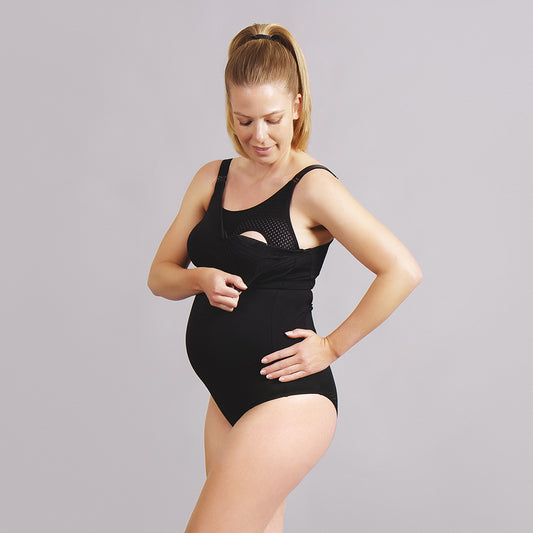
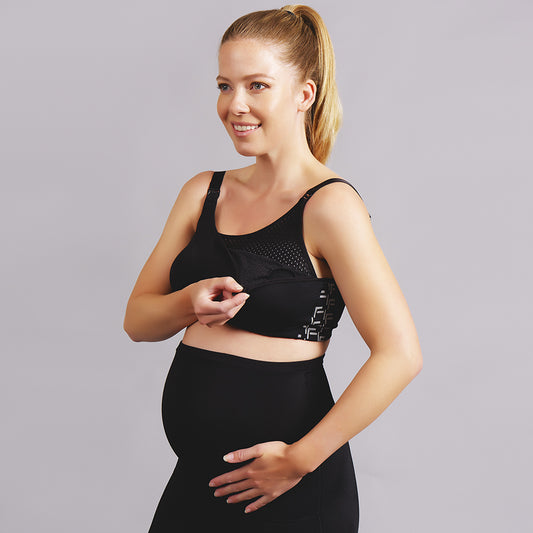
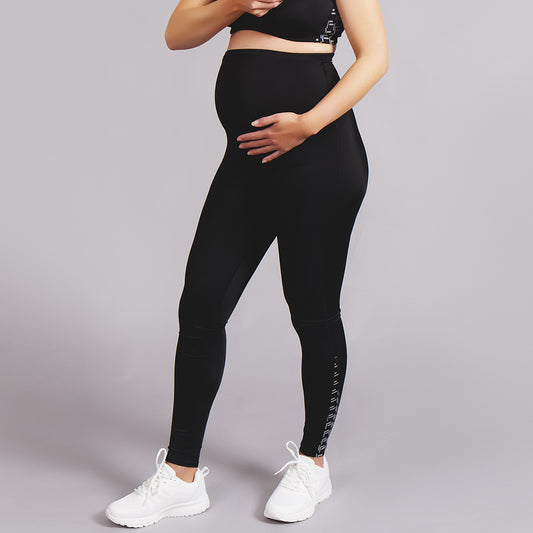
When strength training or running while pregnant, feeling well-supported can make a big difference. Breasts can feel heavier and more sensitive, and the belly may need gentle support during movement.
-
A sports bra with good support can make exercise significantly more comfortable.
-
Flexible, high-waisted workout tights can provide a sense of stability around the belly and lower back.
When your body feels comfortable in your clothes, it becomes easier to move freely without irritation or unnecessary strain.
Exercising with respect for the body
Strength training and running while pregnant can be a way to maintain energy and body awareness throughout pregnancy. The most important thing is not how far or how heavy you train, but that your body feels safe and supported. By adjusting the pace and expectations, exercise can be a help through pregnancy rather than a burden. Your body is already working hard – exercise should feel like a help, not a performance.
Knowledge base: Danish Health Authority, Sundhed.dk, NHS, American College of Obstetricians and Gynecologists (ACOG).