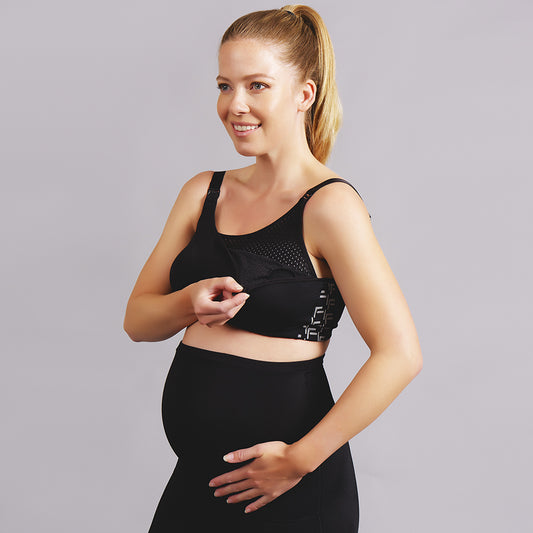
The lactation consultant's best advice for breastfeeding

Breastfeeding can be one of the most natural things – and at the same time one of the most challenging – in the first period with a newborn. For some, it works intuitively from the start, while others experience doubt, insecurity, or pain along the way. Both are completely normal.
Many find that calm, professional guidance early in the process makes a big difference. Here, a lactation consultant can be an important support. But even without one by your side, there are some basic tips that can help you get off to a good start.
Breastfeeding is not about doing it perfectly
One of the most important things many lactation consultants emphasize is that breastfeeding is not about doing it perfectly. It's about finding a rhythm that works for you and your baby.
The body needs to learn, the baby needs to learn, and it takes time. It's completely normal for it to feel unfamiliar at first and to require adjustments along the way.
When the expectation is not perfection, but instead understanding and patience, it often becomes easier to find peace in the process.
Get a good start with latching technique
One of the most important factors for a good breastfeeding experience is that the baby latches correctly. A good latching technique can help prevent sore nipples, ensure the baby gets enough milk, and make breastfeeding more comfortable.
Typically, a good latching technique will feel like this:
-
baby has a large mouthful of the breast
-
lips are flanged outwards
-
you feel no pain during breastfeeding
If it hurts, it's often a sign that adjustments are needed. Small changes in position can make a big difference.
If you want to delve deeper into this, you can read our guide on latching technique for newborns.
Find a breastfeeding position that feels right
There is no single correct breastfeeding position. The most important thing is that you are sitting or lying comfortably, and that the baby is stable and close.
Many find that calm and support around the body make a big difference. Pillows, a relaxed position, and good back and arm support can help make breastfeeding more comfortable – especially at the beginning.
Breastfeeding can take time
In the beginning, breastfeeding can take longer than expected. The baby learns, the body adapts, and milk production needs to establish.
Some feedings are short, others longer. The most important thing is not the length, but that the baby gets what it needs.
If you are unsure about rhythm and frequency, you can read more in our guide on breastfeeding newborns and how often babies should feed.
Listen to your body – and your baby
Breastfeeding is largely about learning to pay attention. Babies often show signs of hunger themselves, and the body responds to demand.
It can be tempting to follow fixed intervals, but many find that breastfeeding on demand works better – especially at the beginning.
Pain is not something you just have to accept
Although tenderness can occur at the beginning, breastfeeding should not cause persistent pain. If it does, it's important to take it seriously.
Often, pain can be caused by:
- incorrect latching technique
- tension in the body
- imbalance in breastfeeding
The earlier it is adjusted, the easier it becomes to move forward well.
If you experience challenges, it may be a good idea to seek help from a lactation consultant.
Allow yourself peace in the process
Perhaps the most important advice from lactation consultants is also the simplest: allow yourself peace.
Breastfeeding is a learning process for both you and your baby. There is no one right way, and there is no one right timing. What works for one person does not necessarily work for another.
When you allow yourself to be in the process – without pressure or comparison – it often becomes easier to find a rhythm that feels right.
Source: Sundhed.dk
If you experience challenges such as uncertainty about milk supply or the baby's well-being, it can be helpful to delve deeper into individual issues. For example, you can read more about too little milk and what you can do in practice.